As artificial intelligence becomes more integrated into health care, its value will depend on whether it can help clinicians make better decisions without losing the judgment, empathy, and human connection at the center of patient care.
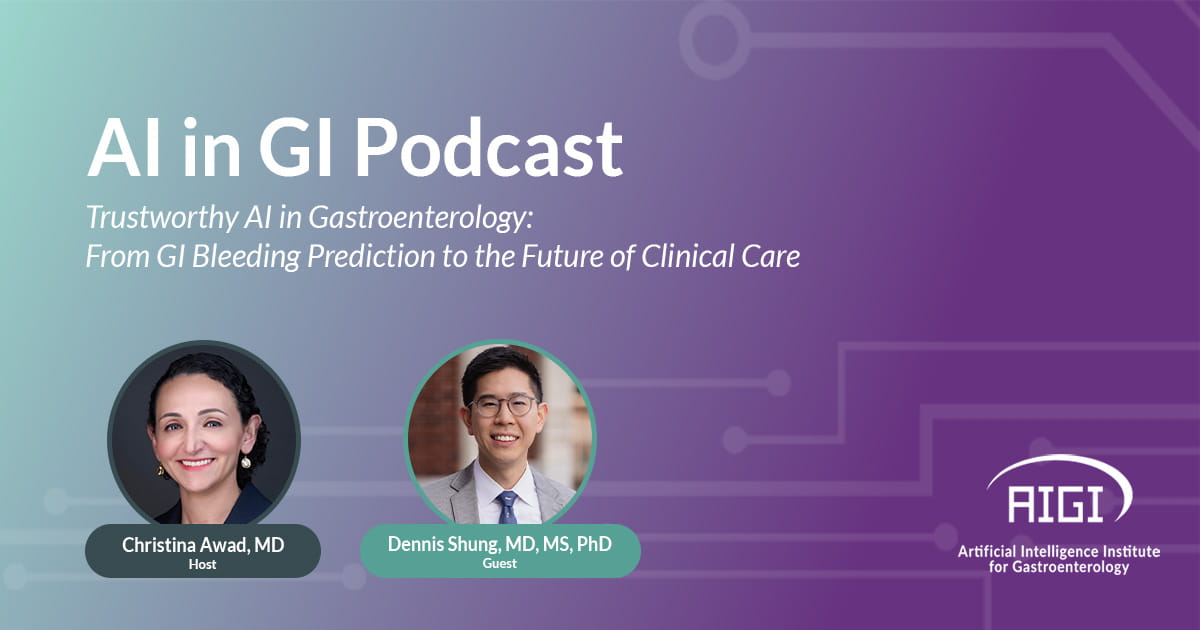
In this episode, Dr. Christina Awad speaks with Dr. Dennis Chung of Yale School of Medicine. Dr. Chung shares how his work as a gastroenterologist led him to pursue clinical informatics, machine learning, and generative AI. He also explains how his experience caring for patients continues to guide his research into AI systems that support physicians rather than replace their expertise.
Using GI bleeding as a practical example, Dr. Chung discusses how machine learning could strengthen risk assessment, identify patients who may not require hospitalization, and make established clinical scoring tools easier to use. The conversation also addresses the limitations of large language models, including inaccurate outputs, incomplete medical records, and the inability to recognize important context that may never appear in a patient’s chart. Looking ahead, they consider how AI could bring together clinical notes, laboratory results, endoscopy video, pathology, and other data to improve diagnosis, track changes over time, reduce documentation burden, and support more personalized care.