The AI Institute for Gastroenterology

AI Innovation: Look Beyond the Buzz

Artificial intelligence (AI) is generating enormous excitement in gastroenterology and endoscopy, and many trainees understandably want to become involved. However, enthusiasm can outpace understanding: what clinicians perceive as technically possible may differ from what AI can realistically accomplish or what patients and practices actually need. The result can be unrealistic projects or “me-too” models that add little clinical value.

For trainees, we suggest a practical approach: learn the fundamentals, start with the clinical problem, and plan for translation from the beginning. Clinicians do not need to become engineers, but understanding model development, validation, bias, and performance metrics helps us to ask better questions and collaborate effectively with data scientists. ASGE provides an expanding pathway for this education through its Artificial Intelligence Institute for Gastroenterology, AI Scholars Program, AI-focused educational programming, and publications from the ASGE AI Task Force in Gastrointestinal Endoscopy.

Second, ask “What problem needs solving?” before “Where can I use AI?” Define the clinical decision, intended user, existing standard, and outcome that would actually change practice. Then involve appropriate technical collaborators early rather than after data collection has begun.

Finally, design with implementation in mind. In our recent review of AI models predicting acute pancreatitis severity, we identified more than 25 published models, yet none are routinely used clinically. Methodological limitations were common, illustrating that labeling a model “AI” does not make it useful.

Trainees are uniquely positioned to recognize unmet needs at the bedside and in the endoscopy unit. The opportunity is not simply to produce another algorithm, but to combine clinical insight, methodological rigor, and multidisciplinary collaboration to develop solutions worth implementing. ASGE’s growing AI community provides trainees a practical place to begin.

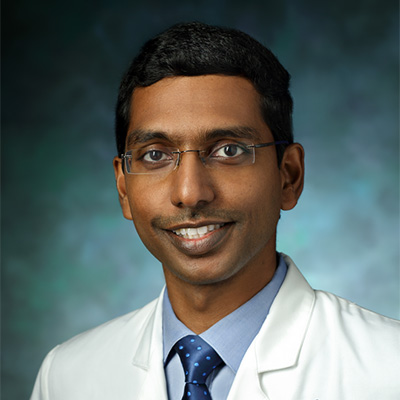
Venkata Akshintala, MD, PhD, is an Associate Professor of Medicine at Johns Hopkins specializing in pancreatic diseases, advanced endoscopic imaging, and pancreatic cancer detection. His research focuses on integrating AI, endoscopic ultrasound, and novel biomarkers to improve the diagnosis and management of pancreatic disease.
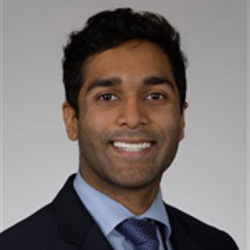
Romik Srivastava, MD, MSCR, is an advanced endoscopy fellow at Johns Hopkins University with clinical interests in pancreaticobiliary, therapeutic EUS, and third-space endoscopy. His research focuses on advancing therapeutic endoscopy through clinical trials, device innovation, and optimization of endoscopic techniques.