Artificial intelligence in gastroenterology has entered a new phase. The conversation is shifting from what AI can do to how we can successfully implement it in real-world GI practice.
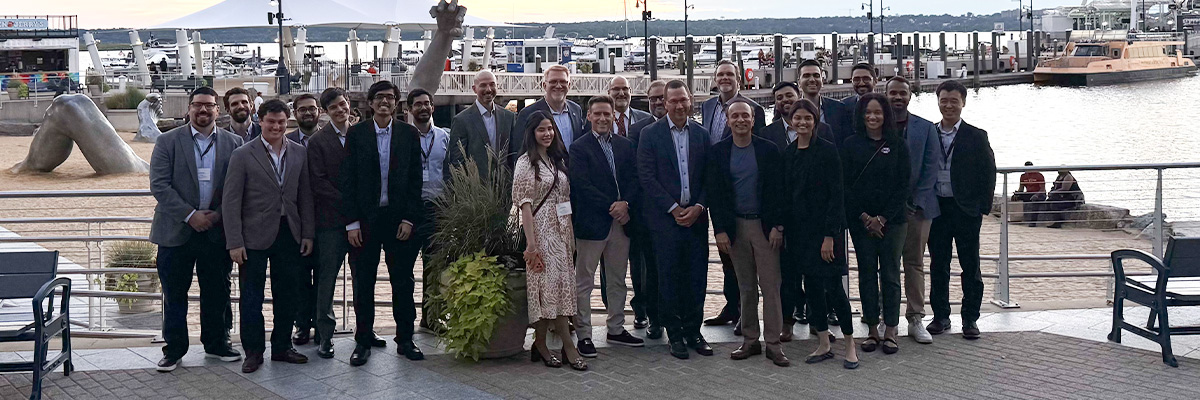
This concept was at the center of ASGE’s 2026 AI Weekend, held September 18–19 in the Washington, D.C. area. Hosted by the Artificial Intelligence Institute for Gastroenterology (AIGI), the weekend combined a half-day Practice Operations Workshop, the 8th Annual Global AI in Gastroenterology Summit and the launch of the 2026-2027 AIGI Scholars cohort.
Together, the programs brought physicians, practice leaders, researchers, regulators, payers, health systems and industry together around a central question: What will it take to move AI from promise to responsible implementation?
From the Demo to the Real World
The half-day workshop, Separating AI Hype from Clinical Reality, brought that question directly into GI practice. The program examined AI applications in direct-access colonoscopy, documentation, prior authorization, scheduling, medication access and other operational functions.
The examples were different, but several common themes emerged:
- start with the problem, not the technology;
- understand the workflow before automating it;
- establish governance;
- pilot before scaling; and
- measure outcomes rather than AI activity.
The workshop also demonstrated that AI’s potential in GI extends far beyond the procedure room. Practices are already exploring how AI can reduce administrative work, improve patient access and allow physicians and staff to spend more time on higher-value activities.
Experts cautioned against assuming an impressive demonstration will translate into real-world results. Implementation, integration, oversight and change management matter.
Expanding the Conversation
The Global AI in Gastroenterology Summit expanded the discussion to the broader environment surrounding AI including evidence, regulation, payment, data, quality and the changing role of physicians, with a consistent emphasis on ensuring that physicians remain part of the decisions shaping how AI enters clinical care.
Since AI technology decisions involve health system executives, IT departments, financial leaders and other stakeholders, gastroenterologists need enough AI literacy to evaluate evidence, workflow, quality, risk and value to advocate for these technologies to be incorporated into their practices.
The conversation about value is evolving as well. Reimbursement remains important, but AI may also create value through better quality, greater capacity, reduced administrative burden, improved patient access and more efficient use of staff.
The question for practices increasingly is, What problem are we solving, and how will we know whether AI made it better?
Preparing for What’s Next
AI Weekend also launched the newest AIGI Scholars Program cohort, continuing AIGI’s investment in developing emerging leaders who can bridge clinical care, technology, evidence, policy and implementation. This is extremely important as AI moves beyond individual tools toward multimodal AI, agentic AI, automation and other technologies that may affect increasingly large portions of GI care and operations. No single stakeholder can navigate that transformation alone.
AIGI brings the GI community and the broader AI ecosystem together to help shape the responsible and practical use of AI in gastroenterology.
The weekend may have ended, but the conversation continues through AIGI’s educational programs, Scholars Program, papers, AI Corner and other resources.
The question is no longer simply what AI can do. It is how we make AI work for our patients, our practices and the future of GI care.
Explore AIGI’s programs and resources at AIforGI.org.

Prateek Sharma, MD, MASGE
Chair, ASGE Artificial Intelligence Institute for Gastroenterology
ASGE Past President, 2024-2025
University of Kansas Medical Center
Kansas City, KS