Introduction to AI
Welcome to Introduction to AI
This mini course is designed to help gastroenterologists build a foundational understanding of artificial intelligence. Across eight modules, you’ll explore the basics of AI, its practical applications, and its transformative potential in medicine and beyond. Through insights from leading experts and carefully curated resources, this series provides a structured introduction to the evolving landscape of AI.
Module 1: What is AI?
Module One concentrates on the fundamentals—key terms and concepts that will lay the groundwork for understanding the technology behind AI and its applications in healthcare and gastroenterology.
Module 2: Basics of Machine Learning
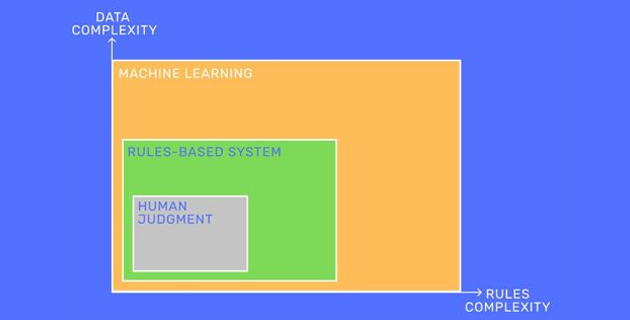
Machine learning (ML) is a subset of artificial intelligence (AI) that enables machines to learn patterns and make predictions from data without being explicitly programmed. It is a powerful tool used across various fields, including healthcare, to solve complex problems. In this module we simplify the terms for easier understanding.
Module 3: Data — The Heart of AI in Medicine
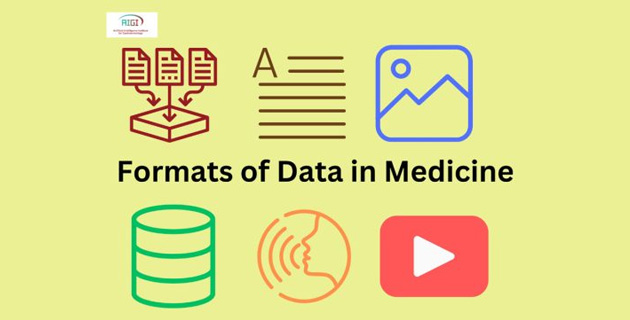
- Understand different types of clinical data used in AI.
- Learn key concepts like data collection, preprocessing, quality control, and bias detection.
- Recognize the challenges of clinical data management.
- Explore examples relevant to real-world medical AI projects.
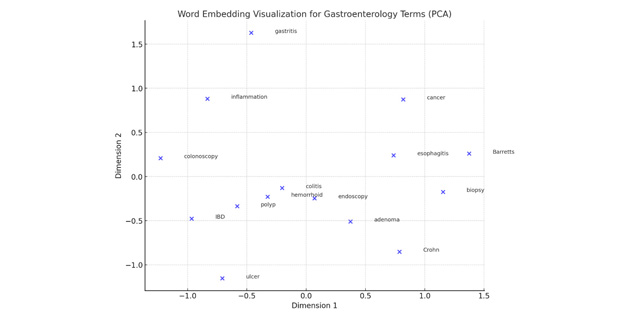
Module 4: Introduction to Large Language Models (LLMs) for Gastroenterologists
What is a Language Model?
A language model is an algorithm designed to predict sequences of words by learning patterns from vast datasets. It doesn’t judge grammatical correctness but focuses on how natural a sequence sounds based on human-written language.
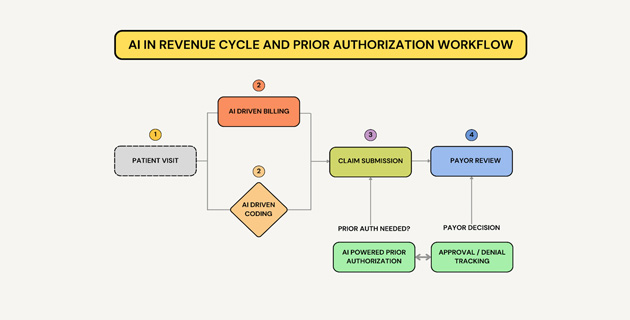
Module 5: Understanding Basics of AI Agents and their Impact on Clinical Practice & Administrative Tasks in Gastroenterology
An AI agent is a system that perceives its environment, processes data, makes decisions, and takes actions autonomously. It can adapt dynamically to new information and guide its own behavior using Large Language Models (LLMs), decision-making algorithms, and tool integrations.
In this module Part 1- provides the potential clinical and administrative tasks that can be augmented by AI agents. Part 2 of this module will go over the basics of the technology behind AI agents.